
Coming Home to Yourself: The Healing Power of Healthy Boundaries

There was a time in my life when I believed being a loving person meant always saying yes.
It meant being available. It meant making the extra trip. It meant avoiding conflict. It meant sacrificing my own needs if it meant someone else would be happier. Overextending myself, thinking I was capable of holding it all, but really just taking more steps towards burnout.
For years, I thought that was what love looked like.
Looking back now, I realize I wasn't just loving other people. I was often abandoning myself in the process.
If you've ever struggled with boundaries, you may know exactly what I mean.
Maybe, like me, you grew up in an environment where boundaries weren't modeled in healthy ways. Perhaps you were taught that saying no was selfish, that honoring your family meant tolerating unhealthy behavior, or that being a "good" person meant putting everyone else's needs before your own.
I carried those beliefs into adulthood.
I became the people-pleaser. The peacekeeper. The one who tried to make everyone else comfortable, often at the expense of my own peace.
At first, I didn't recognize the cost.
But over time, something began bubbling up quietly inside me.
Resentment.
When Resentment Becomes a Teacher
One of the greatest lessons I've learned is this:
Resentment is often a sign that we've abandoned ourselves somewhere along the way.
For years I believed resentment meant someone else needed to change. That they were the issue.
Sometimes that was true.
But healing taught me something much deeper.
Resentment was often revealing the places where I had ignored my own needs, stayed silent when something hurt, said yes when my heart wanted to say no, or continued giving long after I was emotionally exhausted.
It wasn't just pointing to what others were doing.
It was inviting me to ask:
"Where have I stopped caring for myself?"
Why Boundaries Felt So Difficult
Boundaries didn't come naturally to me because I misunderstood what they were.
I thought boundaries were harsh.
I thought they hurt people.
I thought they meant I wasn't being compassionate.
I believed love required sacrifice.
I believed keeping the peace was my responsibility.
I was terrified that if I finally spoke honestly about my needs, people wouldn't like me anymore. That I would be abandoned. That it would start a conflict.
So I stayed quiet.
Until I couldn't anymore.
In one season of my life, I realized I had spent years making the effort to maintain certain relationships. I traveled regularly, rearranged my schedule, and continued extending myself because I believed that was what loving people meant.
Eventually I had to ask myself a difficult question.
Why am I always the one making the effort?
That wasn't a question born from anger.
It was born from exhaustion.
Compassion Includes You Too
One of the biggest shifts in my healing journey was realizing that compassion should include me, too.
There is nothing wrong with loving generously. There is nothing wrong with helping people through difficult seasons.
But compassion without boundaries eventually becomes self-abandonment.
Healthy boundaries don't make us less loving. They simply remind us that our needs matter, too.
They protect our peace.
They preserve our energy.
They allow us to give from a place of fullness instead of depletion.
Boundaries Are Not Punishment
One misconception I carried for years was believing that boundaries were about controlling other people.
They're not.
Healthy boundaries aren't punishments. They're not manipulation. They're not revenge. They're not silent treatment. They're not about forcing someone else to change.
Boundaries simply communicate what we need in order to remain emotionally, mentally, and spiritually healthy.
In healthy relationships, boundaries create honesty. They create trust. They create safety.
The people who genuinely love us may not always understand our boundaries immediately, but healthy relationships leave room for respectful conversations.
I've also learned something that many of us discover the hard way:
Not everyone will appreciate your boundaries, especially if they benefited from your lack of them.
That doesn't necessarily mean they're bad people. But it may reveal that the relationship was relying on your self-sacrifice rather than mutual care.
Sometimes a Boundary Is a New Beginning
Some boundaries are conversations.
Others are decisions.
One of the hardest boundaries I ever set was asking for a divorce after years of emotional pain.
It wasn't a decision I made lightly.
It came after years of trying, hoping, grieving, and reaching a point where I realized I could no longer continue living in an environment where I constantly felt like I was walking on eggshells, emotionally abandoned and abused, and a shell of myself. It was a decision made after months spent in tears in marriage counseling.
As painful as that season was, it gave me something I desperately needed.
Space.
Space to begin healing. Space to rediscover who I was. Space to hear my own thoughts without constant fear, criticism, or confusion.
One of the most important questions my spiritual teacher asked me during that time was, “what do you need right now?”. And that answer was space to breathe without the ongoing exposure to abuse.
Eventually, that boundary led to another one.
I made the difficult decision to leave my hometown and begin again.
I rebuilt nearly every part of my life.
My work. My friendships. My community. My routines.
It was far from easy, and incredibly lonely at times.
But it also became one of the greatest gifts I have ever given myself, because sometimes protecting your peace means creating enough space to discover yourself again.
What Boundaries Look Like Today
Today, boundaries feel very different than they once did.
They are no longer something I fear.
They're simply part of how I care for myself and the people I love.
I address concerns earlier instead of allowing resentment to build.
I protect my time and energy.
I no longer believe every disappointment is mine to fix.
I understand that healthy relationships can hold honest conversations.
Most importantly, I no longer believe I have to destroy myself to prove that I love someone.
Questions to Ask Before Setting a Boundary
For me, learning to set boundaries has been a process.
One of the first times I expressed a new firm boundary and spoke my truth ended in my husband lashing out at me.
Other times, I had to create boundaries in a state of rush because I had to protect myself.
While there are exceptions in abuse situations, it can be helpful sit with yourself in contemplation, or converse your thoughts with a trusted person, before communicating your boundary to a particular person, to avoid making the decision out of anger or haste.
But learning healthy boundaries doesn't mean we stop reflecting. Boundaries require both courage and self-awareness. It can be helpful to pause and ask yourself:
Have I clearly communicated my needs?
Am I protecting my peace or trying to control someone else's behavior?
Am I responding to this situation, or is an older wound being triggered?
Is this boundary coming from love and self-respect, or from a desire to punish?
What need have I been ignoring?
Am I making this decision out of fear, guilt, obligation, or wisdom?
These questions aren't meant to make you doubt yourself.
They're meant to help you respond thoughtfully instead of reactively.
Coming Home to Yourself
If there's one lesson I hope you take from my story, it's this:
You are allowed to have needs.
You are allowed to rest.
You are allowed to say no.
You are allowed to protect your peace.
You are allowed to choose relationships built on kindness, honesty, mutual effort, and respect.
For years, I believed loving others meant sacrificing myself. But healing taught me something different.
Boundaries became one of the ways I learned to come home again.
Not because I loved other people less, but because I finally learned to include myself in that love. ❤️🩹
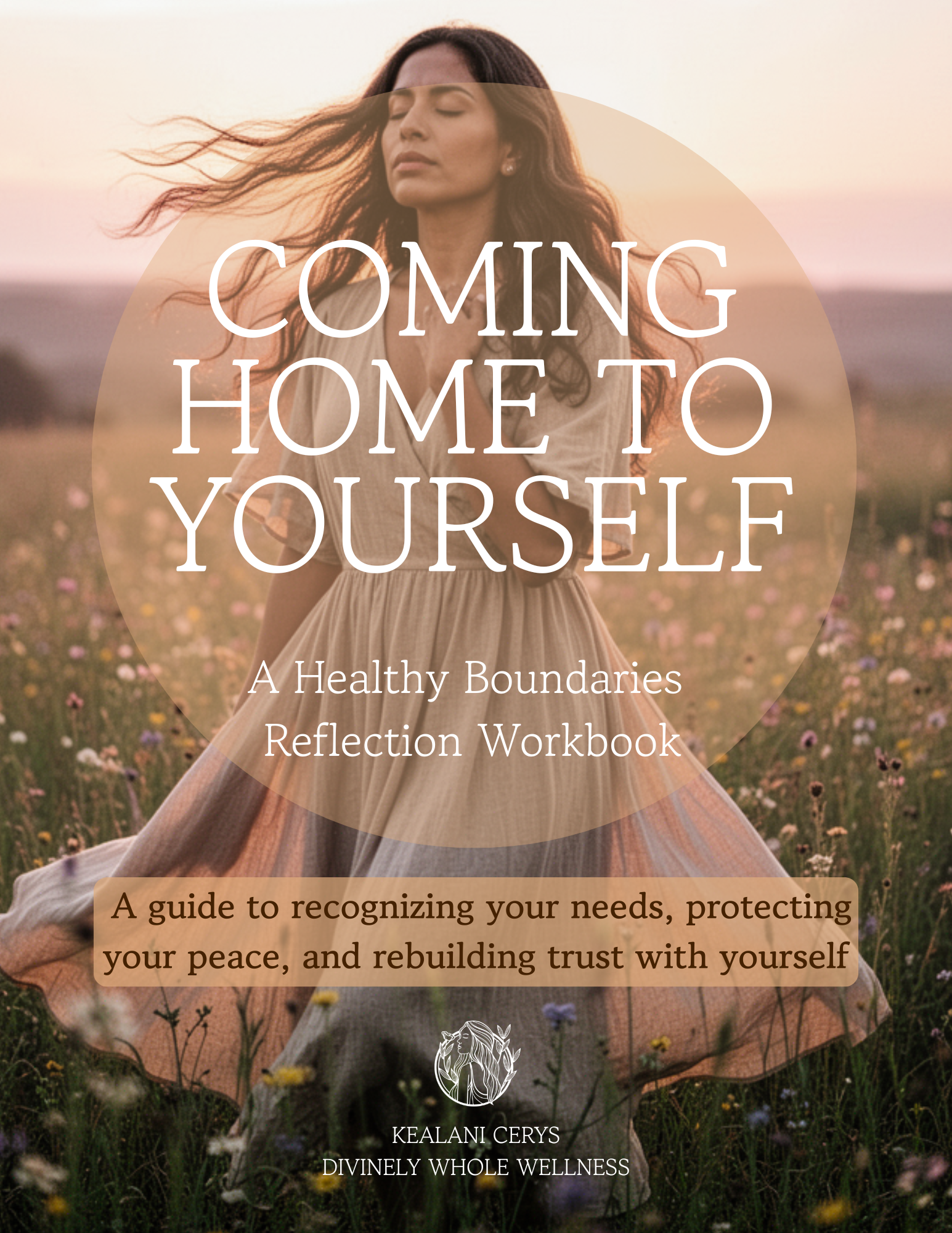
Free Boundaries Workbook
Your healing doesn't have to happen all at once. Sometimes it begins with one quiet moment of honesty. If today's article resonated with you, I'd love to invite you to continue the journey with this free reflection workbook. It's my gift to you, and I hope it helps you take one small step closer to coming home to yourself.