
What Would Jesus Do? Exploring Compassion, Consciousness, and Our Relationship With Animals
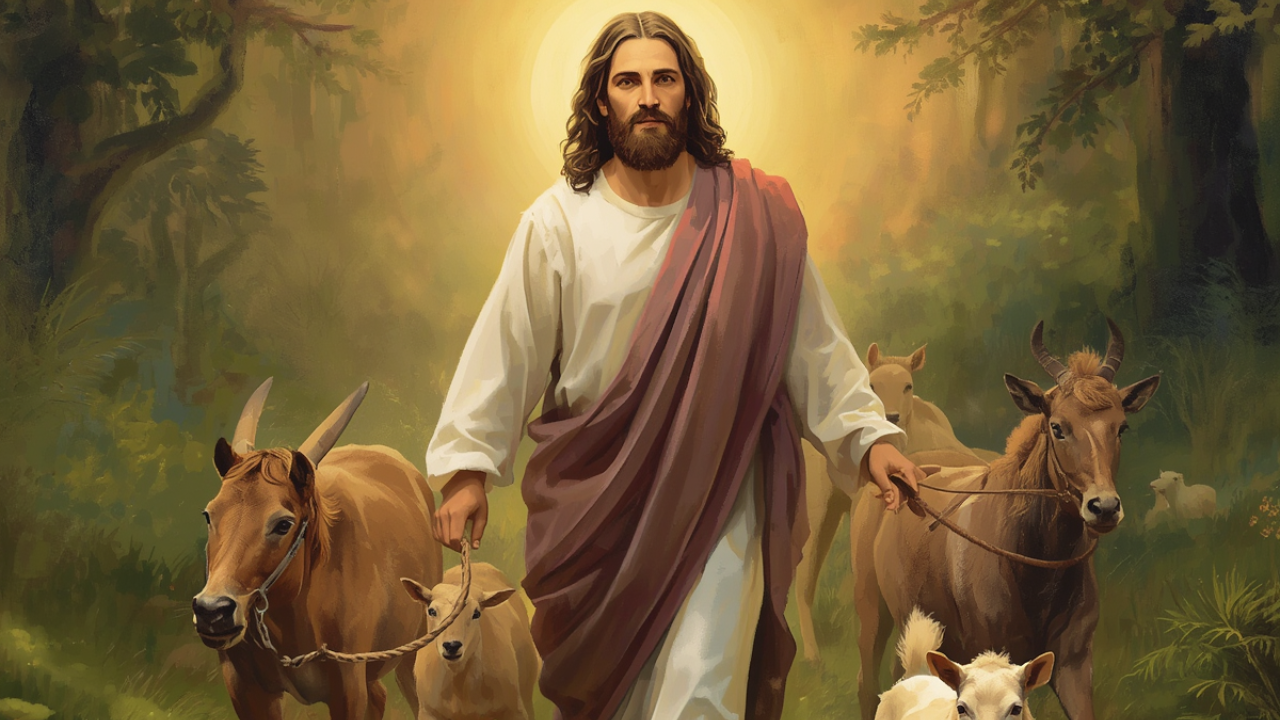
I live in an area where Christianity is deeply woven into the culture. Churches are everywhere, many people openly identify as Christian, and the area tends to lean fairly conservative politically. Hunting and fishing are common hobbies, and finding truly plant-based options can sometimes take quite a bit more effort than it does in other parts of the country.
Living in this environment has made me think a lot about faith, culture, and the ways we inherit beliefs without necessarily questioning them. It has also made me think deeply about animals and the way we relate to them.
I grew up loving animals. I have always been an animal person. Yet for most of my life, I also participated in eating animals without giving much thought to the contradiction between those two parts of myself.
I accepted what most of us are taught from childhood: animals are something we eat, humans need animal products for health, and some animals are pets while others are food. This was simply presented as the way the world works, and for a long time, I didn't question it.
In the years leading up to becoming vegan, I was also on a deeply spiritual path. At the same time, I was being encouraged by my doctor to eat more meat and animal products for my health. I followed that advice, even as my health continued to struggle, and looking back, I can see how much internal conflict that created.
There was some anger and grief in realizing how far I had moved away from something that had always existed naturally within me. I had loved animals my entire life, yet I had allowed myself to believe that my health and my needs somehow placed me above them.
Eventually, something began to change.
I started learning more about animals and their intelligence, emotions, relationships, personalities, and capacity for attachment. I began noticing things I had perhaps seen before but never really allowed myself to consider. I thought about my own dogs and how clearly they experience love, fear, excitement, grief, comfort, preference, and connection, and I began wondering why I had accepted such a rigid distinction between animals I loved and animals I ate.
Why is one animal considered a member of the family while another is considered dinner? Why do we recognize the individuality of dogs and cats but often reduce cows, pigs, chickens, fish, and other animals to products?
And perhaps the harder question is this: Why do we eat animals?
Not why were we taught to. Not why our ancestors did. Not why our culture considers it normal. But why do we?
Have we actually examined that question for ourselves?
What Have We Inherited Without Questioning?
Most of us inherit an enormous amount of our worldview before we are old enough to consciously choose it. We inherit our religion, our politics, our traditions, our ideas about family, our beliefs about success, our understanding of relationships, and our ideas about what is normal.
Food is no different. Most of us were not given a blank slate and asked to thoughtfully decide what role animals should play in our lives. We were simply raised within a particular food system, surrounded by people who participated in it, and taught that this was the normal way humans eat.
That doesn't make our parents or grandparents bad people, and it doesn't make us bad people. It means we are human, and growing into greater consciousness sometimes means becoming willing to examine the things we were taught, even the things almost everyone around us believes.
I don't say this as someone who has always had all the answers. I spent most of my life participating in the very system I'm asking you to examine. My own perspective changed because I became willing to look more closely, and I think there is something deeply spiritual about that willingness.
We don't have to be afraid of questions. If something is true, asking honest questions should not threaten it.
What Would Jesus Do?
This is where my own faith journey has brought me to a question I can't easily put aside: What would Jesus do if he encountered an animal suffering?
I don't mean this as an invitation to debate Bible verses. I'm not a theologian, and I don't claim to have definitive answers to every theological question surrounding animals, scripture, or Christian ethics. I'm asking something more personal: when I think about the Jesus I have come to know, what kind of response do I believe he would have to suffering?
I imagine compassion, mercy, and gentleness. I imagine someone who would recognize vulnerability and respond with care rather than indifference. I imagine Jesus seeing an animal experiencing fear or pain and caring about that suffering rather than dismissing it simply because the being experiencing it was not human.
I imagine him weeping.
And I also imagine that compassion becoming action. Compassion isn't simply feeling sad when something suffers; sometimes compassion asks us to change what we are doing. And, as he did in the temple courts, I believe he would be flipping tables at the animal abuse happening every second on this Earth.
That is the part of this question that has stayed with me. If Jesus is the embodiment of love, mercy, compassion, and care for creation, what might it mean to bring those qualities into the way we relate to animals?
I don't think that is a question we should be afraid to ask.
Dominion or Stewardship?
One of the theological ideas that often comes into this conversation is dominion. Many Christians understand scripture as giving humanity authority over animals and the rest of creation, but I think it is worth asking what we mean when we say that we have authority over something.
Does authority mean ownership? Does it mean entitlement? Does having greater power over another living being mean we are free to use that being however we choose, or could authority also mean responsibility?
Could dominion mean stewardship?
If a being is more vulnerable than we are and we have tremendous power over that being, perhaps that power creates a greater responsibility to protect rather than exploit. This idea feels much closer to the Jesus I have come to know: not domination and entitlement, but stewardship and care for what has been entrusted to us.
There is something humbling about recognizing that being human does not necessarily make us more worthy of life than another species. It gives us an extraordinary amount of power, and perhaps the question isn't whether we have power over animals, but what we choose to do with that power.
What Happens When We Really See Them?
Sometimes awareness changes us before we are ready for it. It is difficult to think of an animal only as food after you have allowed yourself to really see the animal, not as a package, a product, or a number, but as an individual.
An animal can have preferences and fears, form attachments, experience distress, seek comfort, and have relationships with others. The more I learned, the harder it became for me to separate my love for animals from the choices I was making with them.
I think this is where each of us has to become honest with ourselves. You may learn everything there is to learn about factory farming and decide that you still feel comfortable eating animals. You may believe that humans have a different moral status than animals, or that eating animals is a natural and necessary part of being human.
Those are beliefs you are allowed to hold. But have you actually examined them, or did you simply inherit them?
There is a difference.
We Don't Have to Become Another Side
One thing I have become increasingly aware of is how easily we fall into duality: right versus left, conservative versus liberal, Christian versus non-Christian, us versus them. Even within the vegan movement, there can be enormous hostility toward people who don't share the same beliefs, and I don't want this conversation to become another version of that.
I don't want to replace one hierarchy with another. I don't want to say that vegans are enlightened and everyone else is unconscious, because that would simply create another form of superiority.
I have plenty of my own blind spots. I have beliefs that I'm still examining, and I have made choices in my life that I would make differently today because I know things now that I didn't know then. That is part of being human.
We don't need to find a group of people to condemn in order to grow. We can simply become more honest with ourselves.
I've also learned that our values don't always fit neatly into political categories. A person can care deeply about one form of life and struggle to extend that same compassion somewhere else, just as a person can hold beautiful beliefs in one area while still carrying contradictions in another.
I don't think that means we are all terrible hypocrites. I think it means we are all still becoming.
Perhaps instead of asking which side we belong to, we could ask a more difficult question: Are my choices actually aligned with the values I say I believe in?
What Is Stopping You?
If you are reading this and feeling uncomfortable, I don't want you to immediately turn that discomfort into shame. Instead, get curious about it and ask yourself what is coming up for you.
Maybe you're worried about nutrition. Maybe you don't know what you would eat instead, or you love the taste of certain foods. Maybe changing your diet feels inconvenient, or you don't want to be judged by your family and friends. Maybe you have tried eating plant-based before and struggled. Maybe you simply don't want to change.
All of those things are worth being honest about.
And you don't have to transform your entire life overnight. Start with one question: What is one more loving choice I could make?
Maybe you eat one more plant-based meal this week. Maybe you learn more about factory farming, visit an animal sanctuary, or learn about plant-based nutrition from a credible source. Maybe you simply allow yourself to look at an animal differently.
Small changes matter because consciousness often grows gradually.
Don't Get Stuck in Shame
If you eventually decide that your relationship with animals needs to change, please don't spend the rest of your life hating the person you used to be.
I ate animals for most of my life. I participated in a system I now understand differently, followed advice that I believed was helping me, and made choices based on what I understood at the time. I didn't know everything I know now, and neither did you.
There is a difference between taking responsibility and living in shame. Responsibility asks, “Now that I know more, what will I do differently?” Shame asks, “How could I have been so terrible?”
One moves us forward. The other keeps us trapped in the past.
I believe God is far more interested in what we do with the light we have now than in endlessly punishing ourselves for the darkness we couldn't yet see.
Let Love Become the Organizing Principle
Perhaps this is ultimately what I keep coming back to. Not whether we can win an argument about veganism, whether one political group is more compassionate than another, or whether we can find the perfect Bible verse to prove our position, but what happens when we allow love to become the organizing principle of our choices.
What happens when we become willing to question something simply because our hearts are asking us to look more closely? What happens when compassion expands beyond the people we already identify with? What happens when we stop asking only, “Am I allowed to do this?” and begin asking, “Is this loving?”
I don't know exactly where your answers will lead you. They may lead you somewhere different from where mine have led me, and I respect that. But I would encourage you not to be afraid of the questions.
Go into your own heart. Learn. Observe. Question what you inherited. Pay attention to what moves you, and give yourself permission to change your mind when your understanding changes.
The Jesus I have learned to know is not a Jesus who asks us to live in fear of getting everything perfect. He is the Jesus who calls us toward greater love, mercy, compassion, and truth.
Perhaps following that path means allowing our circle of compassion to become a little wider than it was yesterday. Perhaps it means looking at another living being and recognizing that its life matters to it just as ours matters to us. Perhaps it means changing what we eat. Perhaps it begins with simply asking why.
What would happen if we allowed love to become the organizing principle of our choices?
Maybe that's where the real transformation, and a deeper walk with Jesus, begins.