
When Faith Keeps You Stuck: Healing the Shame, Fear, and Spiritual Confusion Around Divorce
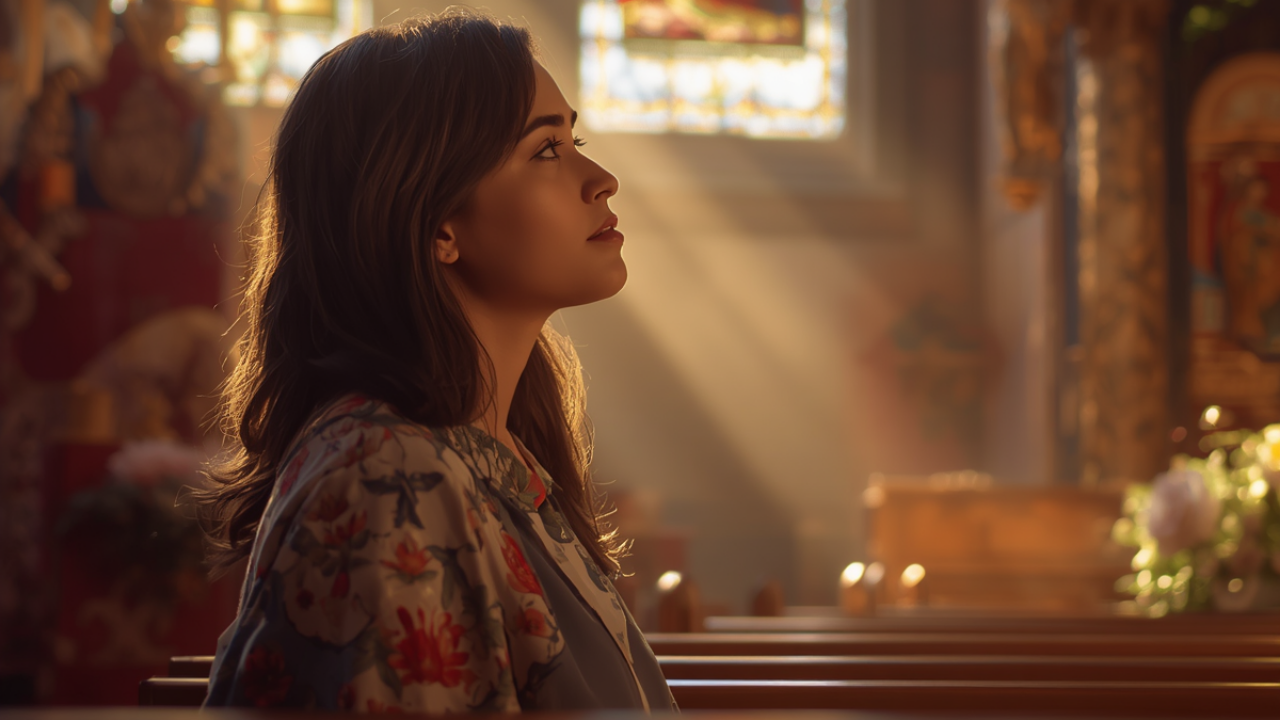
For many years, I believed that leaving my marriage would mean failing God.
I wasn't just afraid of divorce. I was afraid of what divorce meant about my faith, my character, and my eternal future. The possibility of ending my marriage felt like more than a legal decision - it felt like a spiritual one. Somewhere along the way, I had come to believe that if I chose divorce, I might also be choosing disappointment in God's eyes.
Looking back now, I realize that fear was one of the strongest forces keeping me in a marriage that was no longer healthy.
I wasn't raised to believe that marriage was disposable. I grew up in the Catholic Church, where faith was woven into the fabric of our family life. We attended Mass regularly, and I learned many beautiful lessons about love, service, commitment, and devotion. Those foundations mattered to me then, and while I’ve since left the church, in many ways, several of them still do today.
While my husband came from a different Christian denomination, and we church hopped quite a bit during our relationship, when my health began to decline and life became increasingly difficult, I found myself returning to the Catholic faith with even greater intensity. I became consumed with trying to make sure I believed the "right" things and lived the "right" way. Beneath that search was a fear I rarely admitted out loud: What if I had done too many things wrong? What if God couldn't forgive me? What if I wasn't enough?
Looking back, I don't think I was searching for God as much as I was searching for certainty.
I wanted reassurance that I was safe.
I wanted to know I wasn't going to lose God's love.
During those years, I genuinely believed that staying in my marriage, no matter how lonely or painful it became, was simply what a faithful wife was supposed to do. And with those beliefs came many moments of giving my own self and power away - physically, mentally, emotionally, and sexually - in an attempt to be a more “submissive” wife, while quietly abandoning my own self in the process.
That didn't mean my marriage was entirely without good moments, and it certainly doesn't mean I was a perfect spouse. I wasn't. Fear shaped some of my own behavior, too. There were times when I desperately wanted my husband to believe what I believed because I thought it would somehow save our marriage, or perhaps save both of us. Looking back, I can see that fear was driving many of my actions. I had to learn one of the hardest lessons of my life: we cannot change, rescue, or fix another person, no matter how much we love them.
But acknowledging my own growth does not erase what was happening around me.
Over time, I began recognizing patterns I had normalized for years. I felt emotionally abandoned. I experienced criticism that slowly chipped away at my confidence. There were moments when I felt deeply alone, including times when I was seriously ill and longing for partnership, only to find myself navigating those struggles largely on my own. I was abandoned in some of those moments, and there were many nights where I cried myself to sleep as my husband fell asleep right beside me. There were ways my body, my emotions, and my trust were not treated with the care I longed for in a marriage.
Still, I stayed.
Not because I believed everything was okay.
Because I believed leaving would make me a failure. Because I thought maybe things would change. Because I thought I was more of the problem in the relationship. Because I believed God would want me to stay.
I had confused endurance with faithfulness.
I believed submission meant silencing parts of myself. I believed that because I had made vows, my responsibility was simply to endure whatever followed. I began to believe that saying no made me a bad wife, so I often ignored my own comfort, my own body, and my own voice so my husband’s needs could be satisfied. I thought carrying my cross meant continuing to carry burdens that were slowly diminishing my spirit.
Those beliefs didn't develop in isolation. They were reinforced in moments when I was seeking spiritual guidance, including one confession where I left feeling as though my role was simply to be more submissive and obedient. Looking back, I realize how deeply those messages had shaped my understanding of both marriage and God.
Today, I see those ideas differently.
To me, humility and self-erasure are not the same thing.
Humility keeps our hearts open. It reminds us that we don't have all the answers. It invites us to remain teachable, compassionate, and willing to grow.
Self-erasure, however, asks us to ignore our own dignity. It tells us that our needs don't matter, that our intuition cannot be trusted, and that suffering is automatically evidence of holiness. I no longer believe those ideas are the same.
The greatest shift in my healing didn't begin when I decided to leave my marriage.
It began when I started asking questions.
Not rebellious questions.
Honest ones.
I began asking whether the image of God I carried was rooted more in fear than in love.
For much of my life, I imagined God as someone carefully keeping score - a God disappointed by every mistake, ready to punish every failure. A God that I had to give up things for in order to follow. A God I believed asked me to become smaller in order to be faithful. When I imagined standing before Him, I expected disappointment.
That belief shaped nearly every important decision I made.
But slowly, through years of healing, reflection, prayer, and conversations that challenged me to look more deeply, I began encountering a different understanding of God.
One that wasn't built upon fear.
One that wasn't asking me to earn love.
One that wasn't waiting for me to fail.
For the first time, I began to believe that unconditional love wasn't something I had to deserve.
It was something that had been offered all along.
As my understanding of God changed, so did the questions I was asking.
Instead of asking, "How much longer do I have to endure this?", I began asking, "Is this the life a loving God desires for His creation?"
Instead of asking, "What if leaving disappoints God?", I began asking, "What if living without peace is not what God intended for me at all?"
Those questions didn't immediately remove the sadness.
Leaving my marriage remains one of the hardest decisions I have ever made.
I wasn't celebrating.
I was grieving.
Healing doesn't always look like relief. Sometimes it looks like grieving two truths at the same time. I was grieving the marriage I was leaving, but I was also grieving the marriage I had hoped to have. I wasn't mourning only what existed; I was mourning everything I believed it could become.
I wasn't only letting go of a relationship. I was letting go of the future I had imagined for years. The home I hoped we would build. The life I believed we would eventually create together.
There was heartbreak. There was loss. There was uncertainty.
And yet, underneath all of it...
There was peace.
Not because everything suddenly became easy.
But because, for the first time in a long time, my heart and my conscience were no longer fighting each other. I had reached a place where, for the first time in years, I trusted and knew that my decision was aligned with my own walk with Jesus.
Divorce is not failure.
Sometimes it is the painful acknowledgment that something sacred has already been broken, and that healing requires a different path than the one you once imagined.
My story is not meant to tell anyone what decision they should make about their own marriage. Every relationship is unique, and every person's circumstances deserve thoughtful care, wisdom, and support. This isn't an argument for divorce. It's an invitation to gently examine whether fear has become louder than love in your relationship with God.
When we're afraid, certainty can feel safer than relationship.
I spent years trying to make sure every belief was correct, every rule was followed, and every decision was approved.
Looking back, I realize I wasn't learning to trust God. I was trying to protect myself from Him, and protect myself from an eternity of punishment. There is a profound difference between loving God and fearing His rejection, and for a long time, I didn't know the difference.
But if you have spent years believing that asking honest questions somehow makes you less faithful...
If you've confused fear with obedience...
If you've wondered whether God could possibly still love you if your life doesn't unfold the way you once believed it should...
I hope you'll allow yourself to ask a few more questions.
If a loving God created you with such care and tenderness, do you really believe He would abandon you for coming to Him with a humble heart that is sincerely seeking truth?
I don't believe He would.
When you picture the heart of Jesus, do you see someone inviting people deeper into fear - or deeper into freedom, truth, compassion, and love?
In fact, I believe that honest seeking may be one of the deepest expressions of faith we can offer.